
The Allure of Spanish Style Doors
When I bought my fixer-upper Spanish style home, I became captivated by its character and charm. It was clear from the outset that this was a home rich in history, filled with stories of times gone by, waiting to be rediscovered. Among its special features, one stood out: the lovely Spanish Colonial arched doors that were now old and worn.
In this article…
The Charm of Our Spanish Colonial Home
My partner and I dreamed of owning an old home. We loved the connection to the past and its history. This Spanish style home fulfilled that dream in every sense, with each door in the house being a testament to its historic charm. Every scratch, every imperfection, was a part of a story we were now a part of.
The arched doors in particular were a fascinating element. Mimicking the arch on the front door, they created a consistent architectural theme throughout the home, a recurring motif that added to the allure of the house. We couldn’t help but fall in love with these doors. They were an integral part of the home’s personality and added an element of authenticity that was truly invaluable.

However, there comes a point where the history and charm of an older home meet the realities of renovation and restoration. Unfortunately, for our beloved arched doors, this was the case. Despite their unique charm and the character they added to the house, the doors were beyond repair.
Time and the elements had taken their toll, causing the doors to rot, and we found we could not reattach them after our construction work. We were left with no choice but to replace them. It was a tough decision, a trade-off between preserving the character of the house and ensuring its structural integrity.
Spanish Colonial Architecture
Spanish Colonial architecture, originating in the early 16th century, is known for its distinct features. These include whitewashed adobe walls, low-pitched red-tile roofs, and beautifully crafted arched doors.
Spanish explorers introduced the Spanish Colonial style in the New World. It blended Mediterranean and Moorish architecture. It also adapted to the resources and climate where the Spaniards settled. Over time, this style has become synonymous with California and the Southwest, embodying an ethos of romance, heritage, and a sense of timelessness.
Arched doors are a signature element of Spanish Colonial architecture. They are not only aesthetically pleasing but are also steeped in history. Craftsmen often built these doors from local wood to withstand the harsh conditions of the new colonies. Their curved design is a nod to the Moorish influence on Spanish architecture, while their sturdy build testifies to the practical needs of the early colonists.

Our Entry Door
We were told the door on our entry way was nearly 200 years old and original to the house. We loved the arched look and wanted to honor this Spanish Colonial Door’s style.
Our Rotten Doors
Our custom door replacement journey kicked off with a jarring discovery. During a routine home exterior check, our contractor dropped a bombshell – our treasured arched doors were rotten. This revelation stung, as these doors were more than mere fixtures; they epitomized our home’s Spanish colonial charm and distinctive appeal.
An incredible find on EBAY
Shocked by the $10,000 cost to copy both doors, we didn’t want to lose their special charm. So, knowing little about custom doors, I started searching online.
My search took an unexpected turn, landing me on eBay, a platform I hadn’t considered for home remodeling needs If you are interesting in checking them you can click here for Dreams of Italy.
A Surprising Find Online
The family feel of ‘Dreams of Italy’ resonated with me. They seemed busy, likely due to a boom in home makeovers caused by the pandemic, which made me trust them.
They offered something different – a choice between new and 100-year-old reclaimed wood for their Spanish Colonial Doors. We gravitated towards the reclaimed wood, with its obvious age marks and unique flaws, as it fit our passion for authenticity. And when they priced both doors at a surprisingly affordable $3,000, it felt like we’d found a hidden gem.
Our Journey to the Perfect Spanish Style Doors
When the doors arrived, they were unfinished and lacked nail heads. With photographs of our original doors in hand, we actively collaborated with the company, successfully recreating the cherished style at a fraction of the estimated cost. We then took the reins, carefully staining the doors to align with our tastes, and meticulously affixing a stunning door handle we’d discovered.
Imbued with a charming patina and character-rich imperfections, our “new” doors seamlessly merged with our home’s architecture. They perfectly encapsulated our vision, harmoniously blending echoes of the past with the present, while welcoming us into the future of our affectionately remodeled home.
The Original Door
The Custom Doors Pre-staining


After Staining
We added leather conditioner and went with Minwax Dark Walnut for the stain. We then added Marine Seal Once, two coats so hopefully this door doesn’t suffer the same fate as the other ones.

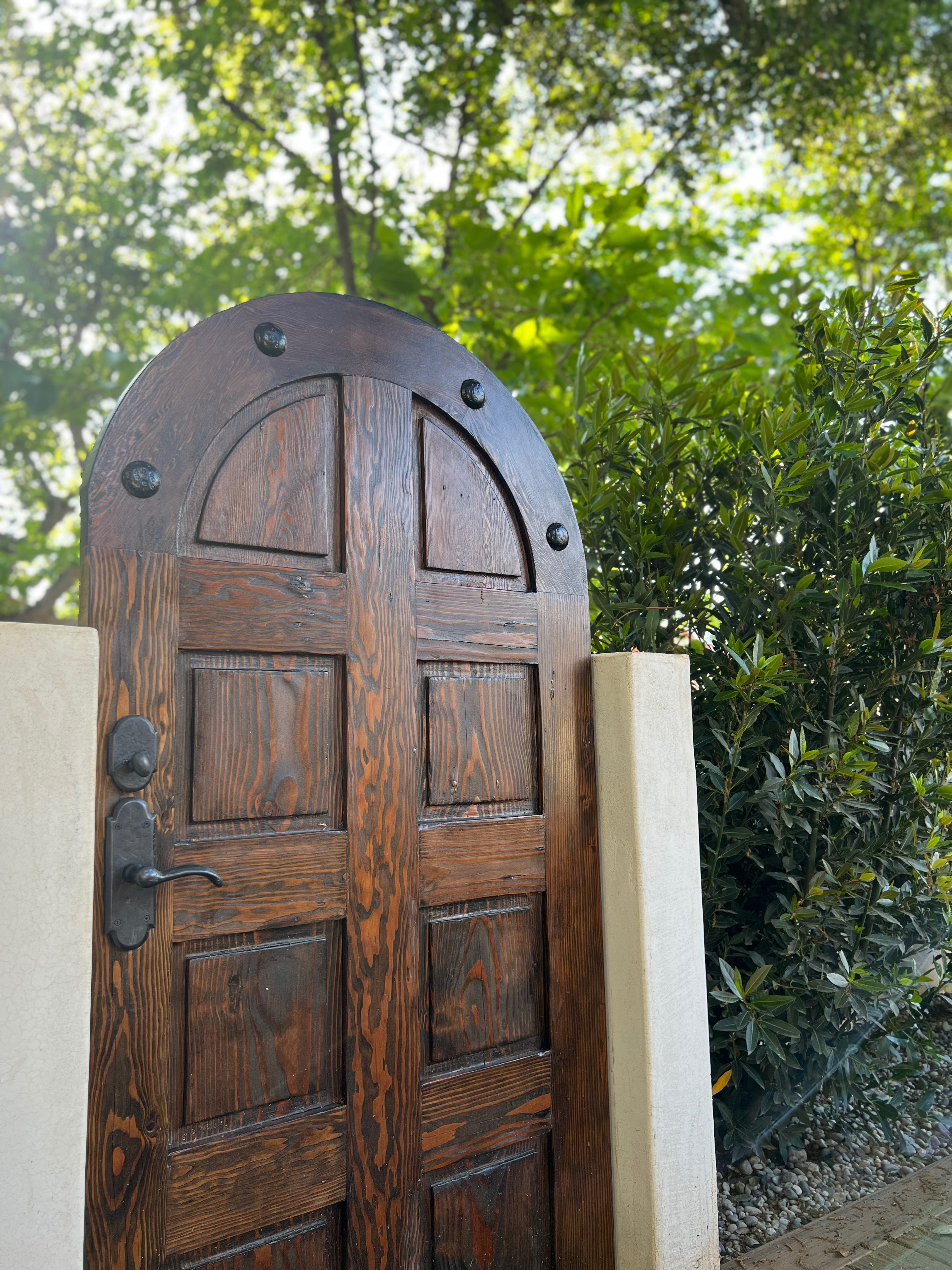
The Final Look
We put the finishing touch on our door restoration by adding Clavos. These decorative nail heads, are classic in a Spanish style door, amped up the vintage appeal of our doors. They boosted the doors’ rustic charm and authenticity, reflecting the original design.
So, what do you think of the Spanish Colonial door? They reflect our journey through a challenging remodel and stand as a testament to our determination to preserve the heritage of our home, all while adding our own touch of history.





Leave a Reply